How rigorous is candidate evaluation?
Rigorous evaluation produces comparable evidence across candidates, collected the same way, scored before anyone discusses it. Résumé matching and conversational interviews produce impressions that feel decisive and predict little.
The evidence on this is settled. In the 2022 Journal of Applied Psychology meta-analysis by Sackett and Zhang, along with Berry and Lievens, structured interviews reached a mean validity of .42 versus .19 for unstructured ones. Structure was the highest-validity single method they examined. Those are correlations with later performance.
Apply that to what a search firm hands you. If the deliverable is a written summary of a free-flowing conversation, you're being given the .19 method dressed as insight. Ask whether questions were set before the first candidate call and whether ratings were recorded independently.
Assessments should match role outcomes
Assessment content has to come from the job. The competencies should read like your commercialization plan translated into behaviors.
Structure alone isn't enough, though. Sackett and colleagues reported an 80% credibility interval for structured interviews running from roughly .18 to .66, a spread wide enough to cover both excellent and near-useless implementations.
That range is the whole argument for inspecting the instrument rather than accepting the label. Ask to see the competency framework built for your role and the anchored scoring scale. Ask for the reference protocol and one anonymized example of how the firm documented conflicting evidence about a candidate. How disagreement gets resolved tells you more than how agreement gets recorded.
Diversity requires a sourcing method
Broadening the pool is a research task, and it belongs at the sourcing stage where the criteria stay identical for everyone. Research summarized by the Harvard Kennedy School People Lab found that finalist pool composition itself shifts evaluation, with the odds of selection rising sharply once at least two candidates from an underrepresented group appear rather than one.
The mechanism is about how evaluators read an outlier, which means the intervention that works is on the research side.
So ask the firm how it widens the target list: which adjacent segments and company types it adds, and how it tracks pool composition through each stage. Also ask what it reports when the qualified pool is genuinely thin. A firm that says the market constraint out loud is more useful than one that promises a balanced slate and quietly relaxes the role requirements to produce it.
How should firms be compared?
Compare firms with one weighted scorecard filled in from evidence. Weight the criteria before the first pitch, while nobody has charmed you yet.
There's real money behind the discipline. SHRM's 2025 benchmarking data puts average recruitment cost at $35,879 for executive hires, and that figure excludes the retained fee and the months of unclosed revenue.
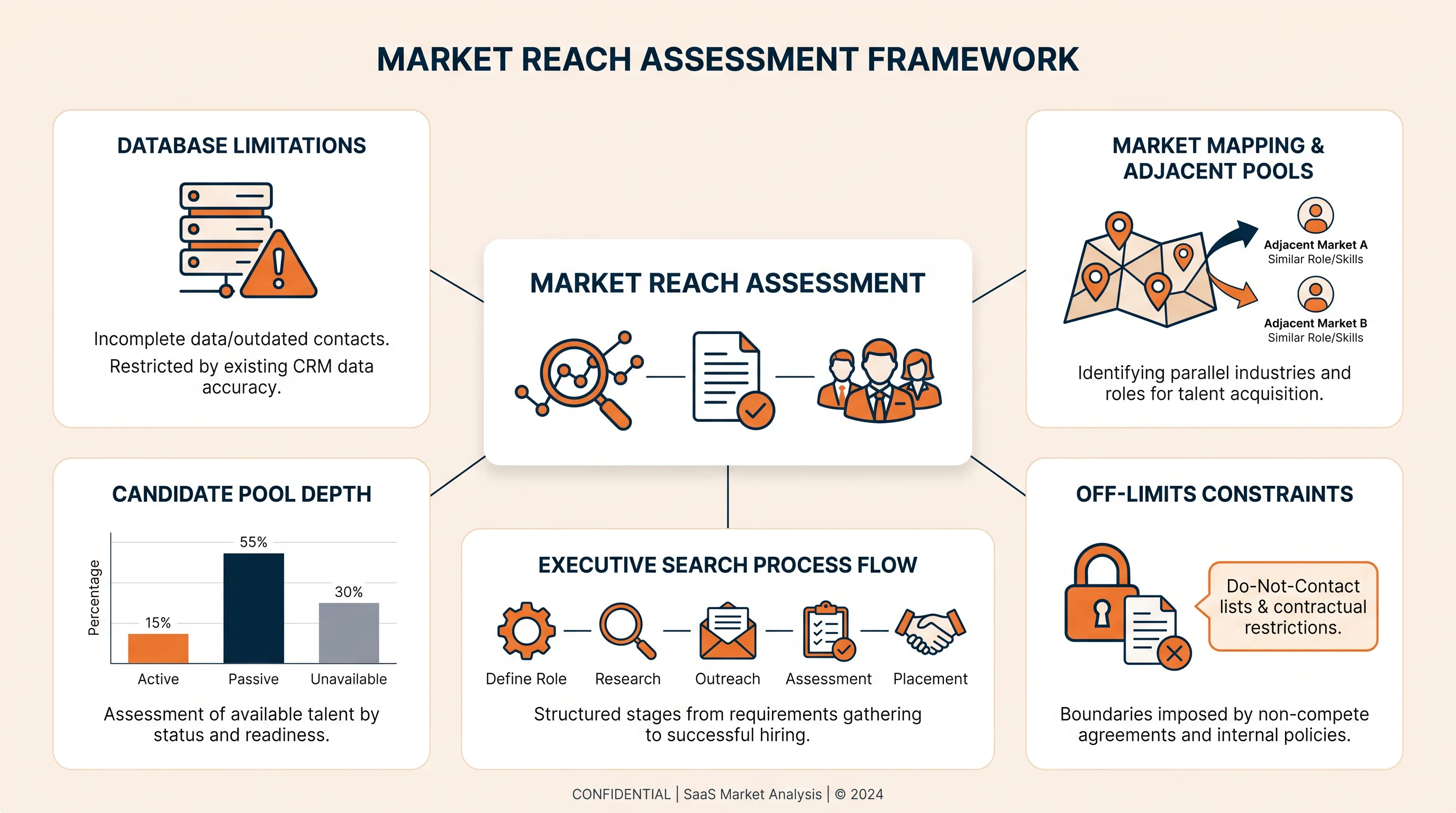
Score each firm from 1 to 5 on role relevance and market access. Apply the same scale to methodology and assessment rigor, then to sourcing breadth and named senior involvement. Reference verification and timeline realism get scored too, as do confidentiality controls. Weight role relevance and market access highest for a specialized mandate, because those two can't be fixed mid-search. Methodology can be tightened after kickoff. A firm blocked out of half your segment by off-limits agreements cannot be.
Ask every reference identical questions
Use the same question set with every reference, in the same order, and write down answers before you form a view. Varying the questions makes the calls incomparable, which is the same flaw that drags unstructured candidate interviews down.
Expect guardedness. As Frank Schmidt and In-Sue Oh noted in their review of a century of selection research, employers remain reluctant to provide more than dates of employment and job titles when giving references.
Reference-givers for search firms are friendlier but similarly cautious, so ask questions that require a number or a story instead of a judgment. Cover what was promised versus delivered and shortlist quality against the brief. Ask about communication during the slow weeks and how the firm handled a setback. Ask whether the placement lasted and whether they'd hire the firm again for a different role.
Investigate evidence gaps before selection
Treat every gap as unresolved until the firm closes it in writing. Vagueness at the proposal stage becomes surprise at week ten.
The gaps worth chasing:
-
Examples described by industry rather than by role, outcome, and date
-
Guaranteed speed claims, which sit oddly against the 120-day executive average reported in 2026 time-to-hire data compiled by The Resource Company
-
Sourcing plans that lean on database size rather than fresh research
-
Off-limits lists that arrive after contract signature
-
Assessment described as judgment or instinct with no scoring artifact
-
References from searches unrelated to your function or stage
A firm quoting a time-to-fill well under that average for a specialized commercial role is describing a different kind of work. Make it explain the difference before you weigh the number as a strength.
Turn findings into a final matrix
Put everything into one document before you decide, because the comparison falls apart the moment it lives in separate notes and memories. Build a matrix with firms as columns and your weighted criteria as rows, then fill each cell with the specific evidence you verified rather than a general impression. Add two rows at the bottom: unresolved questions, and the risk you'd be accepting if you chose that firm anyway.
The matrix does something a meeting can't. It shows you which firm performed well on the criteria that matter most for your mandate and which strengths look impressive but have little bearing on the search you're actually running.
TruAlign Partners specializes in executive search and commercial recruiting for growth-stage and commercial-stage medical device and MedTech companies. Its CarbonCore process starts by defining what success in the role should look like, then evaluates candidates across three dimensions: how they present in the interview, what their experience and qualifications show they can do, and how they are likely to approach and perform in the specific role and environment. Behavioral insights complement, rather than replace, experience, interviews, references, and professional judgment.
If TruAlign is on your shortlist, ask the firm to document its search process and assessment framework against the same criteria you're applying to every other firm, then evaluate the evidence the same way.